Restaurant Business Intelligence Software for Smarter Decisions
Restaurant business intelligence software helps owners turn large amounts of restaurant data into information they can actually use.
Modern restaurants generate data through POS transactions, inventory, purchasing, menu sales, CRM, HRMS, accounting, and daily operations. Having this data is useful, but storing thousands of transactions does not automatically create business intelligence.
Business intelligence, or BI, connects relevant information, organizes it, highlights important patterns, and helps management understand what may be influencing restaurant performance.
The goal is not to replace management judgment. It is to give owners better information before they make important decisions.
What Is Restaurant Business Intelligence?
Restaurant business intelligence is the process of connecting, analyzing, and presenting business data so restaurant owners can understand performance and make better-informed decisions.
Depending on available data, restaurant BI can help analyze:
- Sales
- Revenue trends
- Food costs
- Inventory
- Menu performance
- Customers
- Workforce
- Financial performance
- Multi-outlet operations
Business intelligence becomes most valuable when these areas can be understood together instead of being reviewed as isolated reports.
Restaurant Reporting vs Analytics vs Business Intelligence
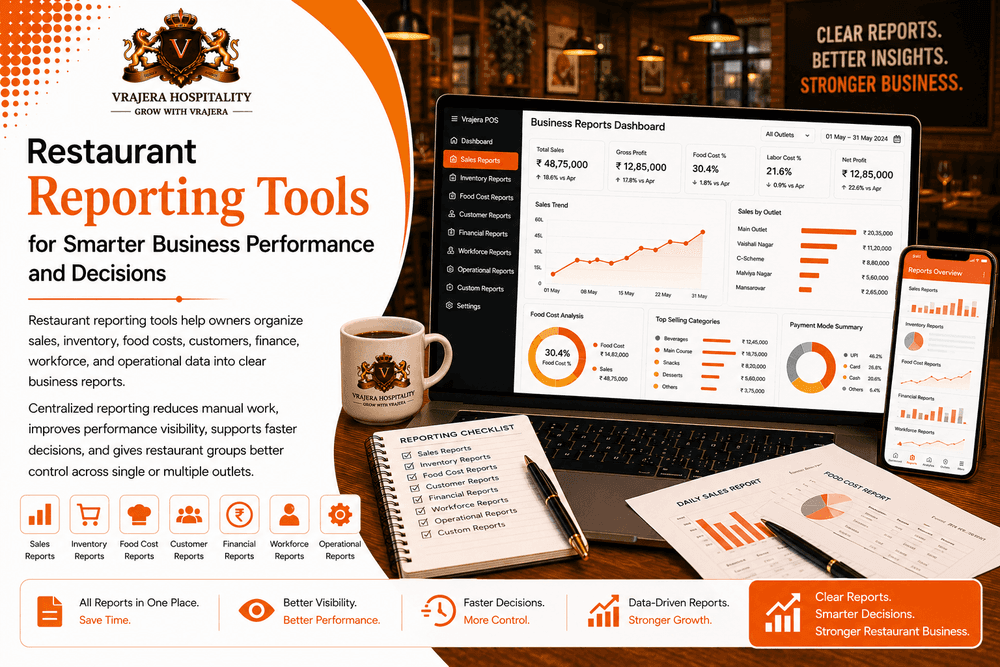
| Area | Reporting | Analytics | Business Intelligence |
|---|---|---|---|
| Main Question | What Happened? | Why Did It Change? | What Does It Mean for the Business? |
| Data View | Structured Reports | Patterns and Trends | Connected Business View |
| Departments | Often Separate | Analyzed | Cross-Functional |
| Management Use | Review | Investigation | Decision Support |
| Multi-Outlet View | Reports | Comparisons | Strategic Visibility |
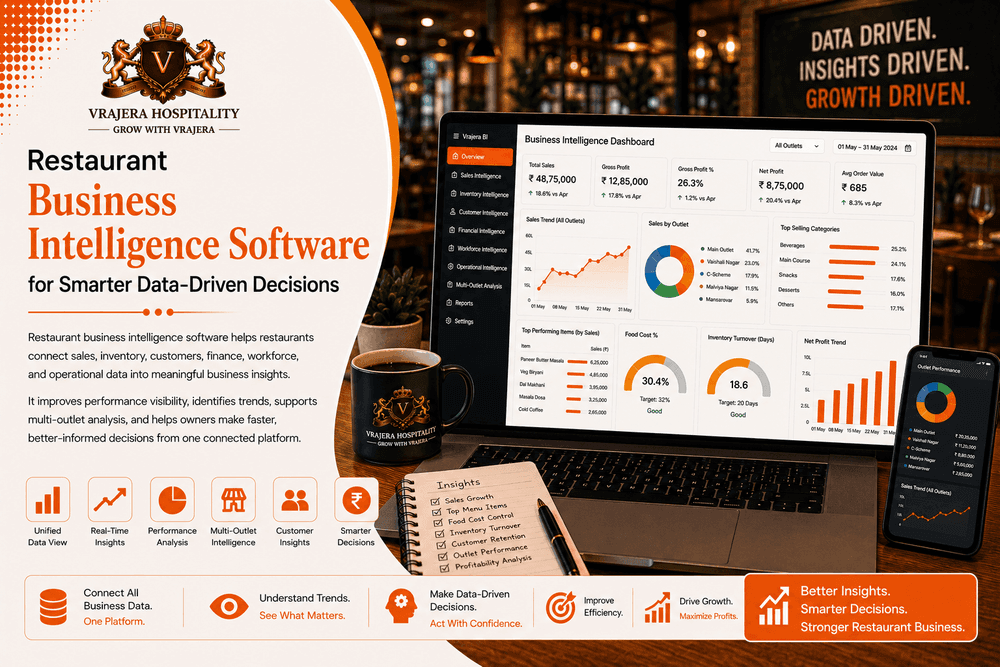
Restaurant BI Dashboard
A restaurant BI dashboard brings important business information into one management view.
Sales Intelligence
Restaurant owners can review relevant information such as:
- Revenue
- Sales trends
- Order volume
- Average order value
- Menu sales
- Outlet performance
Sales intelligence helps management understand what is contributing to revenue changes.
Inventory Intelligence
Restaurant BI can bring together information related to:
- Stock levels
- Inventory movement
- Ingredient consumption
- Wastage
- Purchase activity
- Inventory variance
This creates stronger context for inventory decisions.
Financial Intelligence
Financial information may include:
- Revenue
- Food costs
- Expenses
- Gross profit
- Net profit
- Margins
Connecting financial information with operations helps owners understand what may be influencing profitability.
Cross-Functional Restaurant Analytics
One of the strongest benefits of business intelligence is the ability to understand relationships between different parts of the restaurant.
Sales and Inventory
If a menu item sells more frequently, inventory consumption should reflect that demand.
Connecting sales and inventory can improve purchasing and preparation planning.
Sales and Food Costs
Higher sales do not always mean better profitability.
Business intelligence helps management consider revenue alongside recipe costs, ingredient prices, and food cost information.
Customers and Sales
Where reliable CRM data is available, restaurants can understand customer behaviour alongside transaction patterns.
Workforce and Operations
Attendance and scheduling information can provide additional context when management reviews operational demand and staffing requirements.
Restaurant Trend Analysis
Business intelligence becomes more useful when restaurants can understand how performance changes over time.
Historical Sales Trends
Restaurant owners can compare relevant periods to identify recurring growth, decline, or seasonal patterns.
Cost Trends
Historical information can help management identify changes in:
- Ingredient costs
- Food costs
- Purchasing
- Expenses
- Wastage
Customer Trends
Customer information may provide useful context around repeat visits, spending behaviour, and loyalty engagement where reliable data is available.
Operational Trends
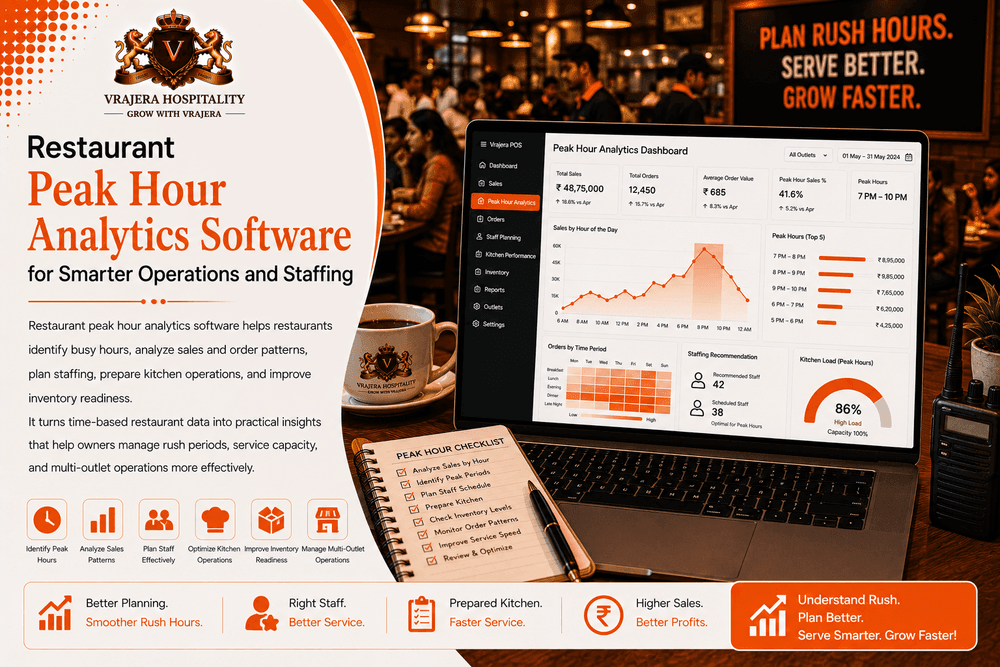
Time-based analytics can help restaurants understand peak hours, menu demand, inventory usage, and other operational patterns.
Restaurant Performance Intelligence
Business intelligence helps management connect individual metrics with broader business performance.
Identify Performance Changes
Instead of simply seeing that a KPI moved, management can investigate related operational information.
For example, declining profit margin may lead to a review of:
- Food costs
- Supplier pricing
- Wastage
- Menu performance
- Operating expenses
Find Business Opportunities
Connected data may reveal opportunities involving menu items, customer segments, operating periods, or restaurant locations that deserve closer attention.
Identify Risks Earlier
Unusual changes in costs, inventory, sales, or other metrics can provide early signals that management should investigate.
BI should support investigation rather than automatically assume the cause.
Multi-Outlet Restaurant Business Intelligence
Business intelligence becomes particularly valuable for restaurant chains.
Compare Outlet Performance
Restaurant groups can organize relevant information across locations, including:
- Sales
- Food costs
- Inventory
- Customers
- Profitability
- Operational performance
Consolidated Business View
Senior management can review restaurant-group performance while retaining the ability to investigate individual outlets.
Understand Location Differences
Outlets may perform differently because of:
- Local demand
- Restaurant format
- Operating hours
- Rent
- Customer profile
- Pricing
- Competition
Business intelligence should help management understand these differences rather than rank locations using one isolated metric.
Business Intelligence for Restaurant Decisions
Restaurant BI should help owners make better decisions, not simply create attractive dashboards.
Menu Decisions
Sales, recipe cost, food cost, and profitability information can provide stronger context for menu planning.
Purchasing Decisions
Inventory consumption, purchasing history, supplier information, and demand trends can help management plan procurement more effectively.
Customer Decisions
CRM and sales information may support better customer segmentation, loyalty, and retention decisions where appropriate.
Financial Decisions
Revenue, expenses, food costs, margins, and operational information provide stronger context for budgeting and profitability management.
Expansion Decisions
Multi-outlet performance and historical business information can provide useful context when restaurant groups evaluate expansion opportunities.
From Restaurant Data to Business Insight
Restaurant businesses often already have large amounts of data. The challenge is making that data useful.
Data
Individual transactions such as orders, purchases, inventory movements, or employee records.
Information
Organized reports that summarize those transactions.
Analytics
Analysis that identifies patterns and trends within the information.
Business Intelligence
Connected insights that help management understand the broader business meaning and support decisions.
This progression is why connected restaurant systems can be more useful than isolated software.
Vrajera Restaurant Business Intelligence
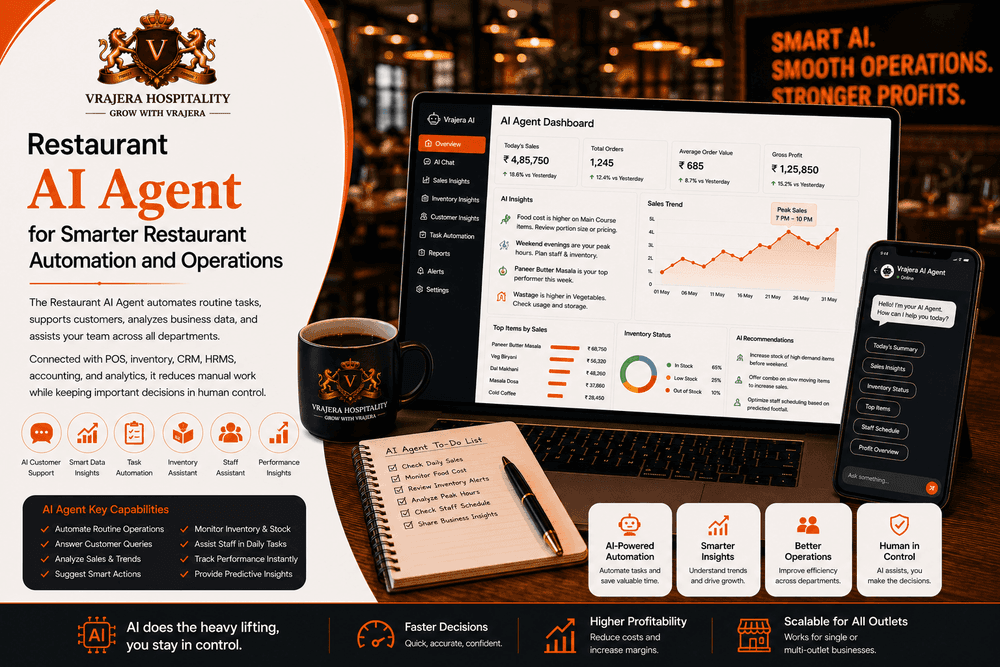
Vrajera Restaurant Business Intelligence forms part of a broader Restaurant Analytics Software and Restaurant Commerce OS designed around food-business operations.
Connected Restaurant Data
Vrajera is designed to connect relevant information from:
- Restaurant POS
- Billing
- Inventory
- Purchasing
- Vendor management
- CRM
- HRMS
- Accounting
- Analytics
This creates a stronger foundation for restaurant business intelligence.
One Connected Business View
Instead of maintaining separate data environments for every department, Vrajera helps bring restaurant information into a more connected operating system.
This can make cross-functional analysis easier.
Move from Metric to Context
A BI dashboard may show that food costs increased.
Connected restaurant data can help management investigate related purchasing, inventory, recipe, wastage, and sales information.
The same principle applies to revenue, customers, workforce, and financial performance.
Multi-Outlet Business Intelligence
Restaurant groups can maintain centralized visibility while analyzing individual locations according to management requirements.
Why Restaurants Consider Vrajera BI
Vrajera connects analytics with the restaurant systems that generate operational and financial data.
This helps restaurant owners move beyond static reports toward a broader understanding of sales, inventory, customers, workforce, finance, and restaurant performance through one Restaurant Commerce OS.
Conclusion
Restaurant business intelligence software helps food businesses turn disconnected data into clearer management insights.
The real value of BI comes from connecting sales, inventory, food costs, customers, workforce, finance, and operational information so owners can understand how different parts of the restaurant influence one another.
Vrajera connects Restaurant Business Intelligence with the wider Restaurant Commerce OS, helping restaurant owners move from raw transactions to reports, from reports to analytics, and from analytics to better-informed business decisions.
Frequently Asked Questions
What is restaurant business intelligence?
Restaurant business intelligence connects and analyzes restaurant data to help owners understand sales, costs, inventory, customers, workforce, financial performance, and operations.
How is restaurant BI different from reporting?
Reporting primarily organizes what happened. Business intelligence connects information across different areas and helps management understand the broader meaning behind business performance.
What data can restaurant BI analyze?
Depending on available systems, restaurant BI can analyze sales, menu performance, inventory, purchasing, food costs, customers, workforce information, financial performance, and multi-outlet operations.
Can business intelligence improve restaurant profitability?
BI can provide stronger information for identifying cost changes, margin pressure, menu performance, purchasing patterns, and other factors that may influence profitability. Management still decides what action to take.
Can restaurant BI software support multiple outlets?
Yes. Multi-location business intelligence platforms can provide consolidated restaurant-group visibility while allowing management to analyze individual locations.
Why choose Vrajera Restaurant Business Intelligence?
Vrajera connects POS, billing, inventory, purchasing, CRM, HRMS, accounting, and analytics through one Restaurant Commerce OS, creating a connected foundation for restaurant business intelligence.